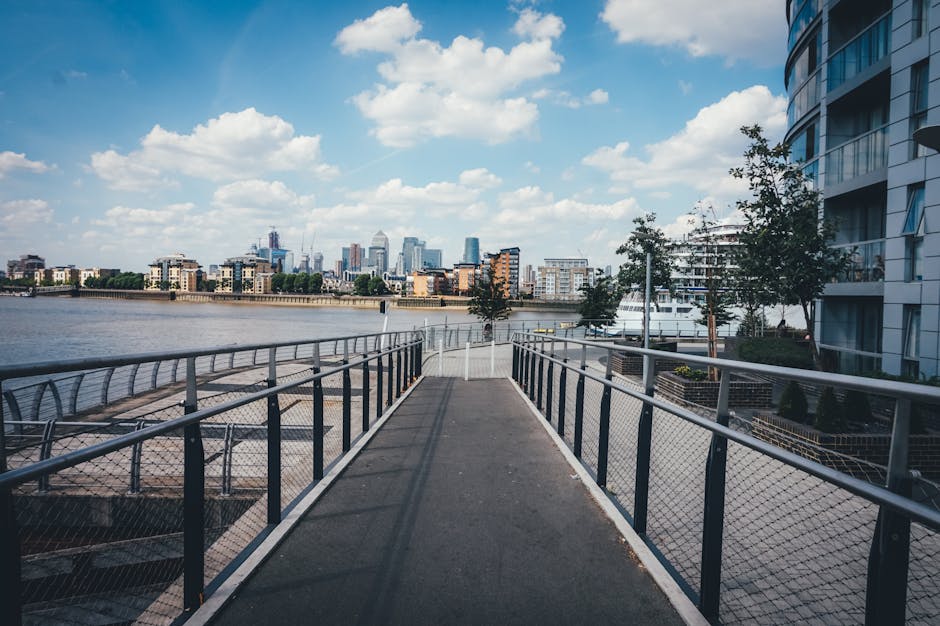
What to know about gardeners blocked access in Greenwich docks
If you are dealing with gardeners blocked access in Greenwich docks, you are usually not facing a gardening problem alone. You are dealing with a logistics problem, a permissions problem, and sometimes a neighbour or building-management issue all at once. That can be frustrating. A team may be ready to mow, trim, clear, or plant, but the route in is shut, awkward, or restricted. In a waterside, high-traffic place like Greenwich Docks, that sort of access issue can stop a simple visit turning into a complicated day. This guide explains what it means, why it matters, how it is normally handled, and what you can do to keep work moving without needless stress.
Below, you will find a practical breakdown of access restrictions, planning steps, common mistakes, compliance considerations, and the best way to prepare for a smooth visit. If you are comparing service options, it can also help to look at broader garden service options and the specifics of regular maintenance before booking. It is the kind of topic people only think about after a gate is locked, a key is missing, or a contractor is standing at the wrong entrance. Let's fix that early.
Table of Contents
- Why access problems in Greenwich Docks matter
- How blocked access is usually handled
- Key benefits of sorting access properly
- Who this is for and when it makes sense
- Step-by-step guidance
- Expert tips for better results
- Common mistakes to avoid
- Tools, resources and recommendations
- Law, compliance, standards, or best practice
- Options, methods, or comparison table
- Case study or real-world example
- Practical checklist
- Conclusion
- Frequently asked questions
Why What to know about gardeners blocked access in Greenwich docks Matters
Blocked access is not just an inconvenience. It can change the entire shape of a gardening job. A team may need a side passage for a mower, a communal entrance for a wheelbarrow, or a service lift for heavier materials. If access is blocked, tasks that should be straightforward can become slow, more expensive, or impossible on the day.
In Greenwich Docks, access issues often come from the layout itself. Apartments, gated estates, waterside paths, shared courtyards, controlled parking, and loading restrictions all create friction. One small thing-say, a code not working at the gate-can ripple through the whole visit. And to be fair, that is rarely the gardener's fault. It is usually a planning issue.
This matters for several reasons:
- Time efficiency: crews lose time waiting at entrances or carrying equipment the long way round.
- Cost control: extra labour and repeat visits can increase the final bill.
- Quality: if a job is rushed because access took too long, standards can slip.
- Safety: awkward lifting, limited visibility, and narrow routes raise the risk of trips or damage.
- Neighbour relations: noise, blocked corridors, or unexpected movement through shared spaces can cause friction.
There is also a simple truth here: good gardening work depends on access as much as tools and skill. A brilliant hedge trimmer is no use if the hedge is behind a locked gate and nobody has the code. Annoying? Absolutely. Unusual? Not at all.
How What to know about gardeners blocked access in Greenwich docks Works
When access is blocked, the solution usually starts before the visit. In a well-run job, the client or property manager confirms how the gardeners will enter, where they can park, which doors or gates they can use, and whether any keys, fobs, codes, or escort arrangements are needed. That sounds basic, but basic is often where things go wrong.
In practice, the process tends to follow a few stages:
- Initial access check: someone confirms whether the garden is reachable via street frontage, communal entrance, private gate, service route, or internal access only.
- Equipment planning: the team decides whether standard tools will fit, or whether lighter, hand-held equipment is needed.
- Permission and handover: the right person provides entry details, often with a contact number in case anything changes.
- Arrival and verification: the crew arrives, checks access, and either proceeds or flags an issue immediately.
- Adaptation or rescheduling: if the route is blocked, the team may adjust the work plan, return later, or book a different entry arrangement.
Sometimes the issue is temporary. A delivery van is parked across the gate. A resident has left the side passage locked. A communal bin store has been positioned where the trolley needs to go. That sort of thing happens. The trick is to spot it early, not after the team has already unloaded.
For larger projects, access can also affect the type of service needed. If the site is cluttered or the route is obstructed, it may make sense to combine visits with garden clearance or discuss more structural changes through landscaping support. A little planning here saves a lot of back-and-forth later.
Key Benefits and Practical Advantages
Sorting access properly gives you far more than convenience. It improves the whole experience for both the property owner and the gardening team.
- Fewer delays: when entry is ready, the team can get straight to work.
- Cleaner budgeting: agreed access means fewer surprises and fewer "just one more visit" moments.
- Better results: the crew has more time for actual gardening, not workaround logistics.
- Reduced risk of damage: the right route helps avoid scratched floors, damaged gates, or broken paving.
- Less stress for everyone: nobody likes standing outside in drizzle trying to ring three different people. Not ideal.
There is also a less obvious benefit: when access is clear, it becomes easier to maintain a consistent schedule. That matters for recurring services such as lawn care or hedge work. If you are keeping things tidy through the season, a reliable entry arrangement helps with ongoing lawn mowing and hedge trimming. In other words, the garden stays manageable instead of swinging between tidy and wild.
Practical takeaway: access planning is not admin for the sake of admin. It is part of the service itself. Treat it that way, and you will usually get smoother visits and better value.
Who This Is For and When It Makes Sense
This topic is relevant for anyone responsible for gardens in or around Greenwich Docks, especially where access is shared or controlled. That includes private homeowners, landlords, letting agents, block managers, residents' associations, and commercial property teams. It also matters for people who only book garden work occasionally, because the first visit is usually where access assumptions get exposed.
You are most likely to need this if:
- the garden is behind a secure gate or within a gated development
- entry requires a fob, key, concierge approval, or resident escort
- equipment has to pass through a narrow hallway, lift, or communal area
- parking or unloading is limited close to the property
- the site has steps, steep paths, or a route that is awkward for wheelbarrows
- you are arranging work after a long gap and the garden has become overgrown
It also makes sense if you have had a previous no-access visit. That is often a wake-up call. You notice the gate code changed, or the lock was replaced, or the site manager now wants notice before contractors arrive. Happens all the time.
If the property has more complex design features, it may help to think beyond maintenance and look at wider workstreams too. For example, if a blocked route is caused by overgrown plants, awkward timber structures, or access being pinched by hard landscaping, a combination of landscape gardening and maintenance planning may be more sensible than treating the issue as a one-off tidy-up.
Step-by-Step Guidance
If you want to prevent access problems from derailing the visit, this is the simplest path to follow. Nothing fancy. Just the practical order that tends to work.
- Map the route in advance. Identify the exact path from street to garden, including gates, lifts, stairs, shared corridors, and any narrow turns.
- Confirm who controls access. Is it the owner, concierge, managing agent, resident, or a neighbour with a key? Get the right contact.
- Check the dimensions. Can the mower, hedge cutter, or clearance bags physically get through the route without damage or delay?
- Agree the handover. Share codes, keys, or fob procedures securely and make sure the gardener knows when and how access will be available.
- Discuss parking and unloading. If a van cannot stop nearby, say so early. The team may need more time or a different arrival plan.
- Prepare the site. Move bikes, bins, planters, locked pet gates, and anything else that narrows the route.
- Build in a backup. Have a second contact number and an alternative arrangement in case the first plan fails.
- Confirm the job scope. If access is limited, ask whether the work should be split into phases or adjusted for hand tools.
Sometimes a small change makes the whole thing work. For example, a garden that cannot take a large mower through the building may still be serviced using compact equipment and a more careful route. That is where a flexible maintenance plan helps, especially if you are already using garden maintenance on a regular basis.
One more thing: do not assume a quick text message is enough for a complex site. For a simple front garden, maybe. For a gated dockside property with multiple access points? Better to confirm it properly.
Expert Tips for Better Results
In our experience, the best access arrangements are the ones that feel almost boring. No drama, no last-minute calls, no guessing. That calm is earned.
- Use one clear access contact: if three people can open the gate, nobody knows who is actually in charge.
- Label the access route: a short note like "use blue side gate, not the main lobby" can save time.
- Think about waste movement: clippings, cuttings, and clearance bags need the same route back out.
- Prepare for wet weather: a wet morning in Greenwich can make shared steps slippery, so access timing matters.
- Keep keys and codes current: if a code has changed, tell the team before they travel.
- Match the tools to the route: a restricted route may call for lighter equipment or smaller quantities of material moved at once.
- Protect communal areas: ask how the team will avoid scuffs, soil spill, or noisy loading through shared corridors.
A small but useful habit is to send a photo of the access point. Not mandatory, just helpful. A picture of the gate, corridor, or loading path answers questions that a paragraph sometimes misses. It is a tiny thing, but tiny things matter in dockside properties where layouts can be quirky. And yes, layouts can be a little awkward. That is life.
If the issue keeps happening, it may be worth looking at the garden itself. Dense planting, unmanageable growth, or poor layout can make access feel worse than it is. In those cases, some light redesign or structural adjustment through landscaping can improve future visits, not just the current one.
Common Mistakes to Avoid
Most access problems are preventable. The trouble is, they are also easy to underestimate.
- Assuming access is obvious: what is obvious to the owner may not be obvious to the contractor on the day.
- Forgetting shared-area rules: some buildings have strict expectations about timing, noise, and movement through communal spaces.
- Not checking equipment size: a machine that works perfectly in an open drive may be useless in a narrow passage.
- Leaving keys or codes with the wrong person: that causes delays and, frankly, a bit of embarrassment for everyone.
- Ignoring clearance needs: blocked access can get worse if overgrown borders, stacked items, or fallen branches are not dealt with.
- Booking work without knowing where waste goes: materials have to be carried out somehow, and that route needs to be clear too.
Another common mistake is treating the access issue as something the gardener should "just sort". Sometimes they can adapt, yes. But if the property has a locked route, a service lift restriction, or a gated entry system, the right information has to come from the client or site manager. That is not being difficult. It is just how the job works.
Tools, Resources and Recommendations
You do not need a huge toolkit to manage blocked access well. You need clarity, communication, and a few practical habits.
| Need | Useful approach | Why it helps |
|---|---|---|
| Entry control | Key, code, fob, concierge arrangement | Prevents wasted travel and waiting |
| Route planning | Photo, short written note, simple sketch | Makes the entry path easy to understand |
| Equipment choice | Compact tools for narrow access | Reduces strain, delays, and damage risk |
| Waste handling | Clear collection route and bag staging | Keeps shared spaces tidy and usable |
| Scheduling | Agree a realistic arrival window | Helps with gate opening, parking, and site readiness |
For service planning and transparent expectations, it can also be useful to review pricing and quotes before the work begins. That way, access conditions are discussed upfront rather than turning into awkward add-ons later. You may also want to read the company's insurance and safety information, especially if the route is tight or shared with residents.
There is also a broader site-level consideration. If access problems are recurring, it may be because the garden or hardscape layout is working against you. In that case, combining routine care with structural changes can help. A small redesign now can save countless frustrating visits over the year. Bit of a pain upfront, sure, but worth it.
Law, Compliance, Standards, or Best Practice
Blocked access in a gardening context can touch on several practical standards, even if it does not usually involve one single headline rule. In the UK, reasonable care is the main theme: care for people, care for property, and care in how work is carried out in shared or restricted spaces.
Good practice usually includes:
- Clear permission: contractors should know they are allowed in and understand which areas they may use.
- Safe movement: narrow steps, wet surfaces, and shared entrances should be treated cautiously.
- Risk awareness: if the route involves lifting, carrying, or awkward manoeuvring, the task should be planned accordingly.
- Respect for communal property: walls, floors, gates, and hallways should not be scuffed or left dirty.
- Accurate information: access instructions should be current, not based on what worked "last time".
Depending on the building or estate, there may also be internal rules from a managing agent, leaseholder agreement, or residents' guidance. Those are not always legal in the broad public sense, but they are still important. If a site manager says contractors must book a slot before entry, treat that seriously. Saves headaches.
For gardeners and property owners alike, health and safety planning matters. You can review practical details in the company's health and safety policy and the accessibility statement if routes or access arrangements need extra consideration. If sustainability is also part of the brief, the recycling and sustainability information is worth a look too.
Options, Methods, or Comparison Table
There is no single best way to deal with blocked access. The right method depends on the site, the urgency, and how often the issue comes up.
| Method | Best for | Strengths | Limitations |
|---|---|---|---|
| Advance access confirmation | Most routine jobs | Simple, cheap, reliable | Depends on everyone responding on time |
| On-site escort | Managed buildings or shared estates | Reduces uncertainty | Needs a person available to meet the team |
| Compact-tool approach | Narrow routes or tight internal access | Flexible and practical | May take longer than full-size equipment |
| Split visit plan | Large or heavily overgrown gardens | More manageable and safer | Can mean extra scheduling and cost |
| Site redesign | Recurring access bottlenecks | Long-term fix | Needs more planning and possibly more investment |
If the issue is occasional, confirmation and an escort may be enough. If it is frequent, you are probably looking at a layout or process problem. Truth be told, if the same gate catches people out every month, the gate is not the only issue. The system is.
Case Study or Real-World Example
Here is a realistic example drawn from the sort of situation that comes up around dockside homes and managed blocks.
A resident books a tidy-up for a small rear garden behind a secure communal entrance. The garden itself is simple enough: a lawn, a few borders, and a hedge that has gone a bit shaggy after several weeks of neglect. The gardener arrives, only to find the side gate is padlocked and the resident assumed the concierge would have the key. The concierge, meanwhile, is on lunch and the access note was never passed along. Not ideal.
What happened next was straightforward enough once the problem was named:
- the client confirmed the correct contact for access
- the visit was rescheduled for a later slot the same day
- the gardener returned with a smaller mower and hand tools in case the communal route was tight
- the owner agreed to keep the route clear and leave a current contact number for future jobs
The result was not dramatic, but it was better. The garden got done properly. The access process got better. And nobody had to force a rush job through a locked gate. That is the real win here.
In more complex cases, a property may need staged work: perhaps a first visit for access clearance and hedge reduction, followed by a second visit for mowing and detail work. That can be a smart approach, especially where clearance work is needed before the site becomes easy to service again.
Practical Checklist
Use this checklist before the gardeners arrive. It is simple, but it covers the essentials.
- Confirm the exact access point
- Share the correct gate code, key, or fob process
- Provide a live contact number for the day
- Check whether parking or loading is available nearby
- Clear bins, bikes, furniture, and other obstacles from the route
- Make sure communal areas can be used without conflict
- Tell the team about any steps, slopes, or narrow gaps
- Agree what happens if access is delayed
- Check whether the job needs compact tools or a split visit
- Keep pets secure and away from the route
- Confirm whether waste can be removed in one go
- Review any estate, building, or management rules that may apply
If you can tick most of those off, you are in good shape. If not, it is worth pausing the booking until the access plan is clearer. A few minutes now can save a lot of fumbling around later.
Conclusion
What to know about gardeners blocked access in Greenwich docks comes down to this: access is part of the job, not an afterthought. In a place with secure entries, communal routes, and tight waterside layouts, even a small access problem can affect timing, safety, cost, and the quality of the finished work. The good news is that most issues can be avoided with a bit of planning, clear communication, and the right service setup.
Whether you manage one garden or several, the smartest approach is to check the route before the crew arrives, match the tools to the site, and keep backup contact details ready. That way, the day feels calmer, the work goes faster, and the garden gets the attention it deserves.
If you want help planning a visit, comparing maintenance options, or preparing a site with difficult entry, start by reviewing the available service information and reach out when you are ready.
Get a free quote today and see how much you can save.
Frequently Asked Questions
What does it mean when gardeners are blocked from access in Greenwich Docks?
It means the team cannot reach the garden easily because a gate, route, code, parking space, or communal entry point is unavailable or restricted. Sometimes the issue is temporary, and sometimes it is built into the site layout.
Who is usually responsible for giving access?
That depends on the property. It may be the owner, tenant, concierge, managing agent, or site manager. The key is to make sure one person is clearly responsible and the instructions are current.
Can gardeners still work if access is narrow or awkward?
Often, yes. Smaller tools, careful scheduling, and a better route plan can make a big difference. But if the route is too tight for safe movement, the job may need to be split or adjusted.
Will blocked access make the job more expensive?
It can, especially if the team has to wait, return, or use extra labour to move equipment. The best way to control cost is to sort access before the visit rather than after problems arise.
What should I tell a gardener before they arrive?
Give them the exact entry point, access codes or key details, parking guidance, and a contact number for the day. If there are steps, shared corridors, or loading restrictions, mention those too.
Is an on-site escort really necessary?
For some managed buildings, yes. It is often the simplest way to avoid confusion, especially where access is controlled by concierge staff or where routes are not obvious.
What happens if a gardener cannot get in on the day?
The visit may be delayed, rescheduled, or shortened depending on the situation. If access cannot be restored quickly, the team may have to leave and return later.
Does blocked access affect lawn mowing and hedge trimming differently?
Yes. A mower may need a wider route than hand tools, while hedge trimming can sometimes continue if the team can reach the work area with lighter equipment. The access route matters more for bigger machines.
How can I prevent repeat access problems?
Use the same clear process every time: one access contact, current codes, clear route notes, and a quick check before each visit. If the issue keeps happening, consider whether the site layout needs a more permanent fix.
Should I choose a different gardening service if access is difficult?
Not necessarily. The better question is whether the service is comfortable working with restricted access and whether they can plan sensibly for the site. A good provider will be honest about what is workable and what is not.
Can blocked access be related to health and safety concerns?
Yes. Narrow steps, slippery surfaces, poor lighting, and awkward lifting can all increase risk. Safe access planning helps protect both the people doing the work and the property itself.
What is the smartest first step if I am unsure about access?
Walk the route yourself and look at it like a contractor would. If you would hesitate with a mower, trolley, or bag of waste, then the gardener probably will too. It sounds simple, but that quick check often solves half the issue before it starts.